
Education and School Buildings

WHAT IS MODULAR EDUCATIONAL SCHOOL BUILDING?
Modular educational school buildings are prefabricated educational facilities constructed using a modular building system, a purpose-built educational structure (for classrooms, labs, offices, etc.) where volumetric or panelized modules are manufactured off-site in a factory, then transported to the school site and assembled into a complete building.
It can be permanent or temporary, fully code-compliant, and functionally identical to traditional construction.
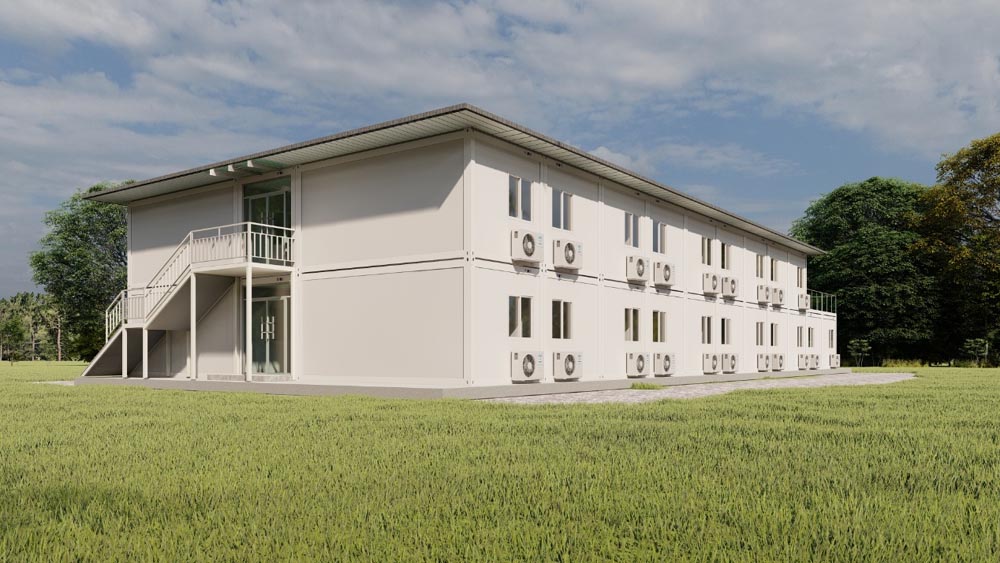
MODULAR EDUCATIONAL SCHOOL BUILDINGS KEY FEATURE
Off-site fabrication
- Modules built indoors in controlled conditions.
- Complete with walls, floors, roof, MEP (HVAC, electric, plumbing), finishes.
On-site assembly
- Fast installation (weeks/months vs. years for traditional).
- Site work and factory production run in parallel.
Flexibility & scalability
- Single classrooms to multi-story complexes.
- Easily expanded, reconfigured, relocated, or reused.
Dual use
- Permanent: Long-term, code-compliant, multi-story.
- Temporary/portable: For overflow, renovations, emergencies.
Quality & sustainability
- Precision manufacturing, consistent quality.
- Less waste, less site disruption, greener.
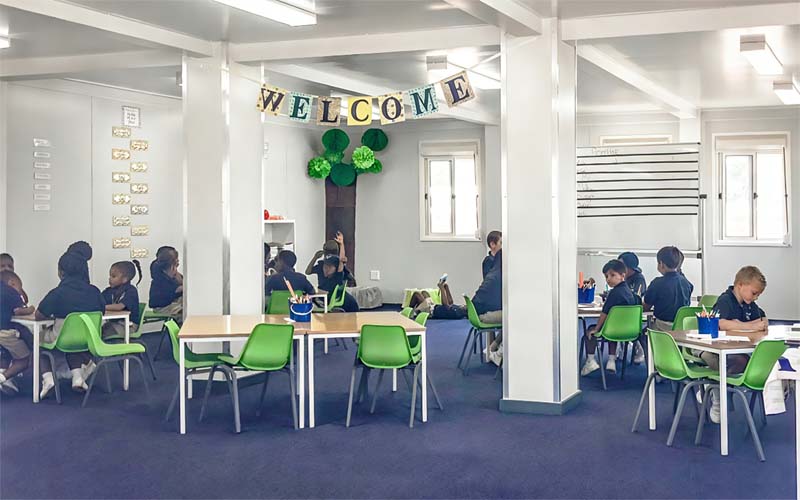
TECHNICAL DATA OF EDUCATIONAL SCHOOL BUILDINGS
Modular education buildings must adhere to the same structural, safety, and energy standards as traditional masonry or steel-frame schools. Below is the technical breakdown of the materials, engineering, and performance standards typical of modern modular campuses.
1. Structural Engineering & Framing
The skeleton of a modular school is designed for “rigidity for transport,” meaning it is often structurally superior to site-built frames to withstand the stresses of being moved by crane and truck.
- Primary Frame:Typically Cold-Formed Steel (CFS) or Hot-Rolled Structural Steel. Steel is preferred for schools due to its non-combustible nature and ability to support multi-story loads.
- Floor Loads:Standard classrooms are engineered for a live load of at least 40–50 psf (1.9–2.4 kPa), while corridors and heavy-use areas are often rated for 80–100 psf (3.8–4.8 kPa).
- Roof Loads:Engineered based on local snow load requirements, typically ranging from 20 psf to 50+ psf.
2. Building Envelope & Insulation
Energy efficiency is a priority to reduce long-term operational costs for school districts.
- Wall Systems:Often utilize Sandwich Panels (PU/PIR or Rockwool) or traditional stud walls with high-performance batt insulation.
- U-Values:Typical exterior wall assemblies aim for a U-value of approximately 15 to 0.25 W/m²K, depending on regional climate zones.
- Windows:Double or triple-glazed Low-E argon-filled units with aluminum or uPVC frames to maximize thermal retention and sound bridging.
3. Interior Technical Requirements
Education environments have specific “Life Safety” and acoustic codes.
- Fire Rating:Materials must meet Class A fire spread ratings. Common configurations include Type V-B (unprotected) or Type II-B (non-combustible) Interior walls often use 5/8″ Type X gypsum board for 1-hour fire ratings.
- Acoustics (STC Ratings):Classrooms require a high Sound Transmission Class (STC), usually STC 45–50 for walls between classrooms, to minimize distractions.
- Ceilings:Acoustic Ceiling Tiles (ACT) are standard to manage reverberation times, crucial for student speech intelligibility.
4. MEP Systems (Mechanical, Electrical, Plumbing)
In modular construction, MEP is “plug-and-play” at the module joints.
System | Technical Standard |
HVAC | Usually decentralized Wall-Mount Heat Pumps (Bard units) or centralized dedicated outdoor air systems (DOAS) for superior CO2 monitoring. |
Electrical | Pre-wired MC cable or conduit within factory walls. Connections between modules are made via “mate-line” junction boxes. |
Data/IT | Integrated CAT6 or fiber-optic raceways to support smart boards, Wi-Fi access points, and security cameras. |
Lighting | LED flat-panels with occupancy sensors and daylight harvesting capabilities. |
Foundation: Can be placed on helical piles, concrete piers, or full perimeter foundations, depending on whether the building is permanent or relocatable.
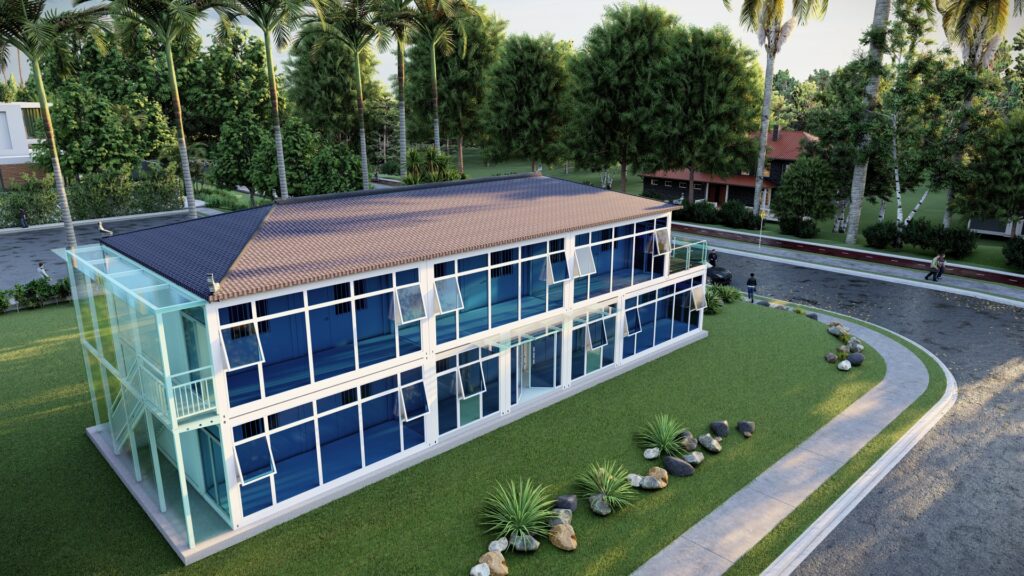
ADVANTAGE OF MODULAR EDUCATION AND SCHOOL BUILDINGS
Feature | Benefit to Schools |
Speed | Schools can be expanded or replaced during a single summer break, minimizing disruption to students. |
Sustainability | Factory construction reduces material waste and minimizes the carbon footprint of heavy machinery at the school site. |
Cost Predictability | Indoor construction prevents weather delays, which are a primary cause of budget overruns in traditional building. |
Air Quality & Safety | Because materials are stored in dry, indoor environments, the risk of mold or moisture-related issues is significantly lower. |
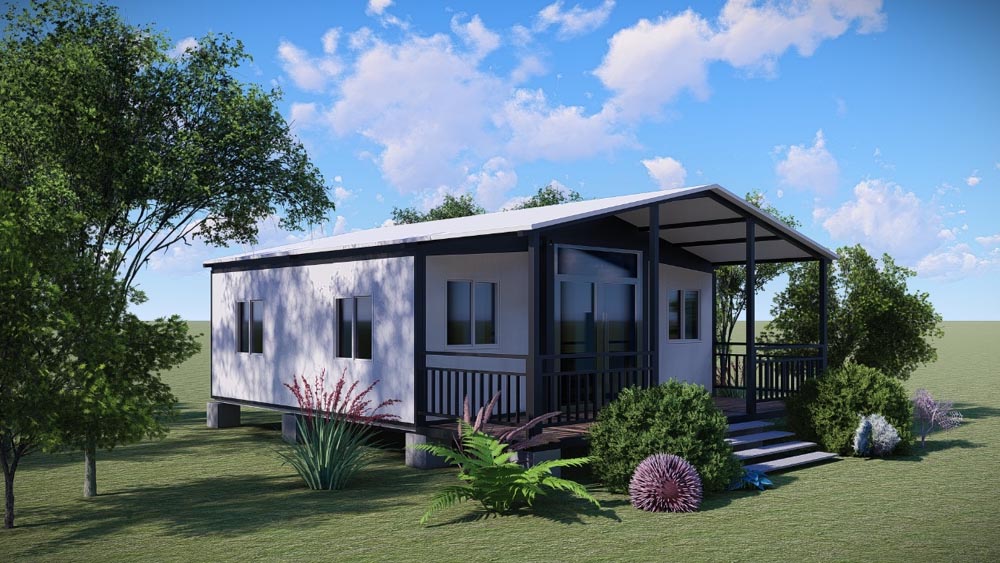
WHERE ARE THE EDUCATION AND SCHOOL BUILDINGS USED?
Classrooms, science labs
Libraries, cafeterias, admin offices
Temporary space during renovations
Rapid response to enrollment surges
Permanent new schools or additions
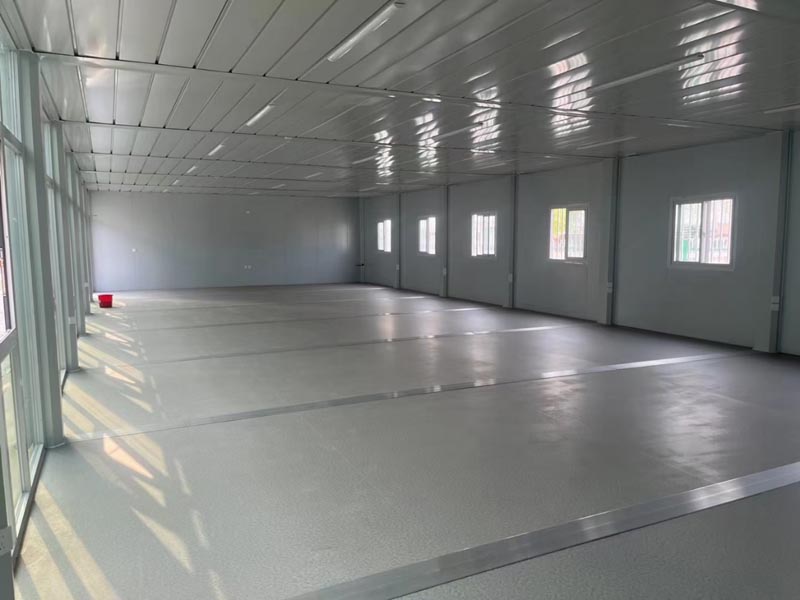
EDUCATION AND SCHOOL BUILDINGS TYPES
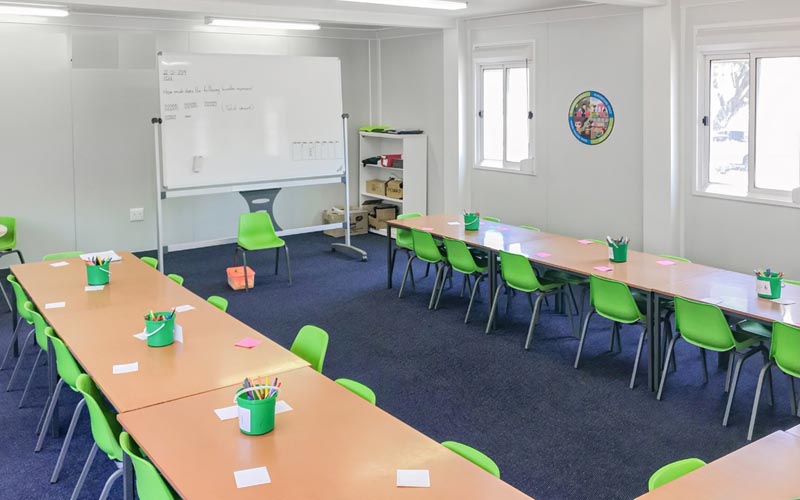
1. Permanent Modular School Buildings
◦ Multi-story, steel structures
◦ For new schools, major additions, campus replacements
◦ Fully finished (MEP, interiors, exterior)
2. On-site assembly
◦ Single-story or stacked modules: 2–10+ classrooms with restrooms/offices
◦ Standard sizes
3. Specialty Spaces
◦ Science labs, computer labs, media centers, gyms, bookstores
◦ Administrative offices, teacher lounges, daycare centers
4. Portable / Relocatable Classrooms
◦ Standalone or connected modules
◦ For temporary overflow or permanent use
Modular Education & School Buildings for Sale
MDOULARCAMP is a professional supplier of high-quality modular structures, specializing in the design, manufacturing, and delivery of modular school buildings, modular classrooms, office modules, laboratory units, and multi-story educational facilities. Our modular education buildings are fully prefabricated in the factory, delivered ready for on-site assembly, and built to meet international construction standards. They offer fast installation, flexible layout, strong durability, low cost, and easy expansion or relocation.
We provide turnkey solutions including design, production, transportation, installation, and after-sales support.
If you are interested in purchasing modular school buildings or need a quotation, please contact us for detailed specifications and pricing.
Contact Us
We’re always ready to listen to your needs and provide professional solutions for your business.
- MODULAR CAMPS CO.,LTD.
- 15 Changjiang Rd, Pingdu, Qingdao,China.
- +86-15963001578
- +86-15963001578
- info@modularcamps.com
- https://modularcamps.com