
- Home
- Helical Pile
Helical Pile

WHAT ARE HELICAL PILES?
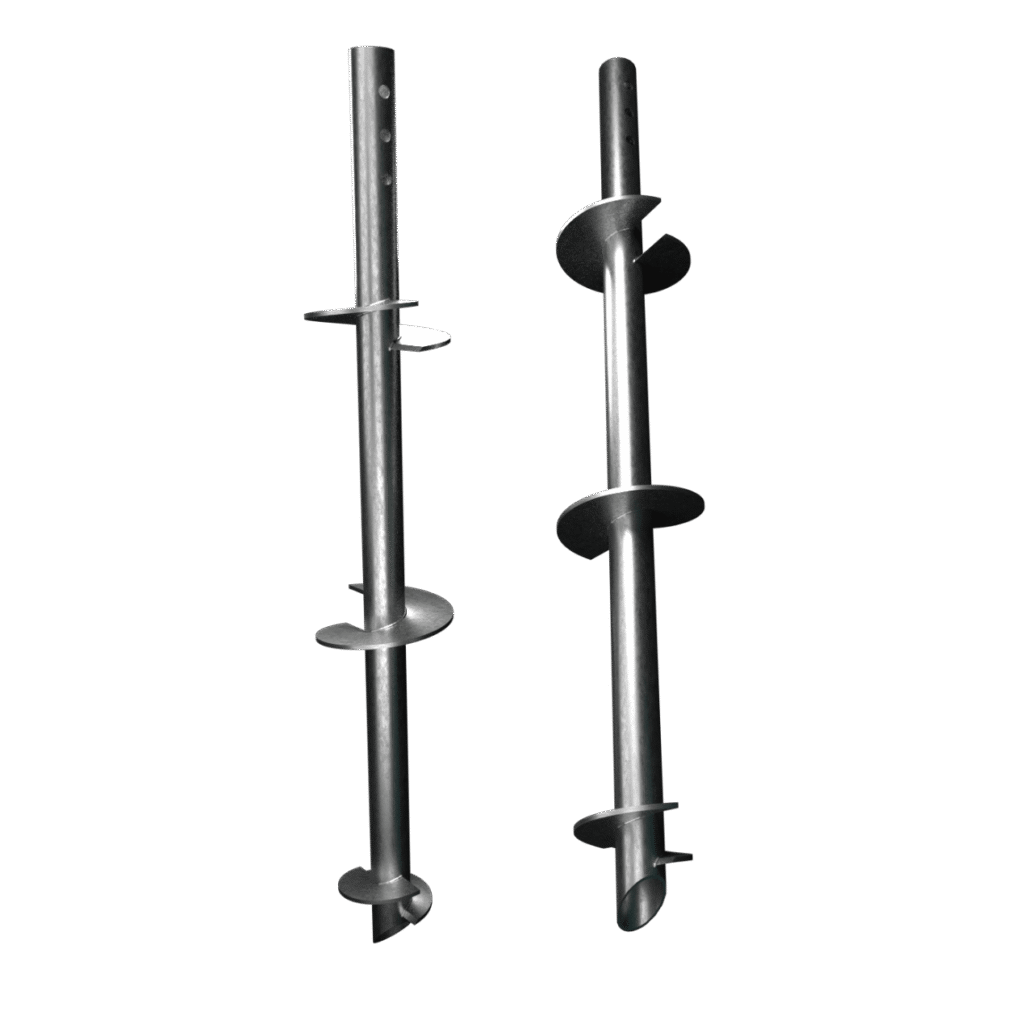
A helical pile (also known as a helical pier, screw pile, or helical anchor) is a deep foundation solution used to support or resist loads for various types of structures. Helical pile foundations are segmented deep foundation systems with helical bearing plates welded to a central round or square steel shaft. The load of a structure is transferred from the shaft to the soil through these bearing plates. The concept is founded on the principle of turning a screw into stable subsoil strata until the torque applied indicates that the necessary load capacity has been achieved. Helical piles work for both compression and tension loads.
The first piece of the helical pile is called the lead; this is the piece that is first rotated into the ground. The lead has multiple helical blades, also referred to as helical bearing plates, that can vary in size, shape, and number. After the lead follows any number of extensions, depending on the required torque or depth. These are simply shafts that are bolted and pinned to the lead and to each other at their ends. The top of the pile is the incorporated into the foundation system via a bracket or other connection method.
A helical pile typically consists of two main components:
The Shaft: A central hollow or solid steel pipe.
The Helices: One or more steel screw-like plates (flights) welded to the shaft. These provide the bearing capacity by gripping the soil.
HELICAL PILE TECHNICAL DATA
Shaft Specifications
The shaft is the primary structural member. Its capacity is determined by its shape and material grade.
Feature | Round Shaft | Square Shaft |
Common Sizes | 2.875″, 3.50″, 4.50″ (OD) | 1.50″, 1.75″, 2.00″, 2.25″ (RCS) |
Material Grade | Typically ASTM A500 Grade B/C | Typically ASTM A29 or A572 |
Primary Strength | Superior in lateral and torsional loading | Superior in torque-to-capacity ratio |
Typical Use | Heavy commercial, solar, compression | Residential underpinning, tension anchors |
Helix Geometry
The "flights" or helices are responsible for transferring the load to the soil.
- Thickness:Generally ranges from 375″ to 0.50″.
- Diameter:Common diameters are 8″, 10″, 12″, 14″, and 16″.
- Configuration:Piles can have a single helix or multiple helices (e.g., an 8″/10″/12″ lead section).
- Pitch:The distance between the threads is usually standardized at 3″ to ensure the helix “tracks” into the soil without churning it (minimizing soil disturbance).
Capacity and Torque Kt
One of the most critical technical aspects is the Torque Correlation Factor (Kt). There is a direct empirical relationship between the torque required to install a pile and its ultimate load capacity.
The formula used by engineers is:
Q ult = K t x T
Where:
- Q ult= Ultimate capacity (lbs)
- Kt = Torque correlation factor (typically 7 to 10 for round shafts and 10 for square shafts)
- T = Final installation torque (ft-lbs)
Mechanical Performance Ranges
While specific values depend on the manufacturer (such as Hubbell/Chance or Magnum), standard performance ranges are: Allowable Capacity: Ranges from 10 tons to over 100 tons per pile. Yield Strength: Steel usually starts at 50,000 psi or higher. Corrosion Protection: Most technical specs require Hot-Dip Galvanization per ASTM A123, providing a service life of 50–100 years depending on soil acidity.
Connection Details
Technical data sheets also specify the bolt strength at the couplings where extensions are added.
Bolts: Usually Grade 2, 5, or 8 structural bolts.
Coupling: A “sleeve” or “internal swage” system that must resist the maximum installation torque without shearing.
HELICAL PILES ADVANTAGES
Helical piles offer several unique advantages over traditional concrete foundations:
Minimal Disturbance
They cause very little vibration and noise, making them perfect for urban areas or near sensitive structures.
All-Weather Installation
They can be installed in rain, snow, or freezing temperatures.
Environmentally Friendly
They can be removed and reused, and they don't require the excavation of large amounts of soil.
Wetland/Water Use
Because they don't require a dry hole for concrete, they are the go-to choice for boardwalks or docks in marshy areas.
WHERE TO USE HELICAL PILES
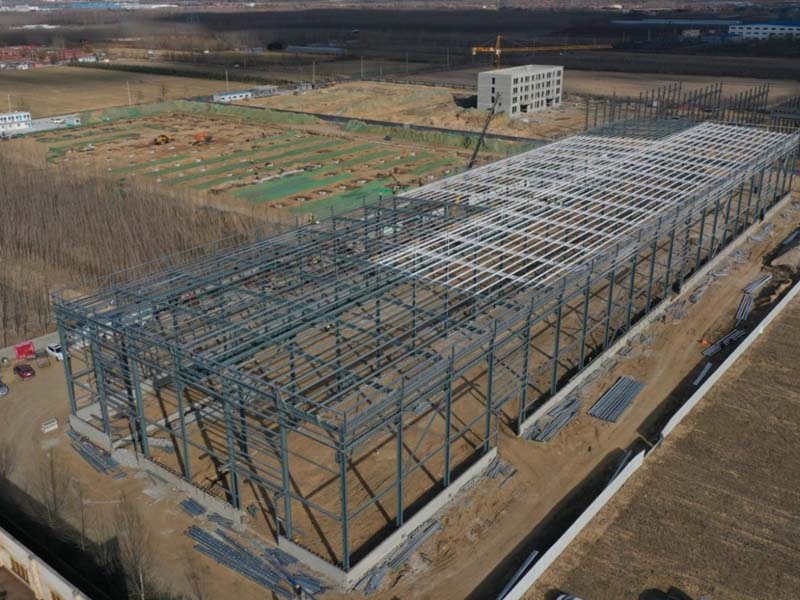
Helical piles are used wherever traditional concrete footings are too difficult, messy, or physically impossible to install.
Here are the most common places to use them:
- Residential Projects
- Foundation Repair (Underpinning):If your house is settling or cracking, piles are screwed under the existing foundation to stabilize or lift it.
- Decks and Porches:Perfect for avoiding the “dig and pour” mess in a finished backyard.
- Home Additions:Used when adding a room where a full-size excavator can’t fit.
- Environmentally Sensitive Areas
- Wetlands and Marshes:Ideal for boardwalks and docks because they don’t require heavy excavation or wet concrete that could leak into the water.
- Tree Protection Zones:The small footprint of the pile avoids damaging critical root systems of nearby trees.
- Energy and Infrastructure
- Solar Farms:Used as the base for solar panel racking systems because they are fast to install across large fields.
- Telecom Towers:Excellent for resisting the “wind pull” (uplift) on tall antennas.
- Utility Poles:Used for supporting power lines in remote or soft-soil areas.
- Restricted Access Sites
- Indoor Construction:Because the installation equipment is small (like a mini-excavator), they can be used inside existing buildings for floor reinforcement.
- Tight City Lots:Useful when you can’t get a concrete truck or large drill rig between two close buildings.
- Temporary Structures
- Oil and Gas Sites:Used for temporary pipeline supports or equipment pads; when the project is over, they are simply “unscrewed” and the site is left clean.
- Modular Classrooms/Offices:Provides a fast, removable foundation for temporary trailers.
How Helical Piles Work
The magic of a helical pile lies in its installation and physics. As the pile is rotated into the soil, the helical plates provide the necessary lift and bearing capacity.
Installation
High-torque hydraulic motors twist the pile into the ground.
Torque Monitoring
Throughout the process, installers monitor the "installation torque." There is a direct mathematical correlation between how hard it is to twist the pile and how much weight it can support.
Reaching Load-Bearing Soil
The pile is driven until it hits a dense enough soil layer to meet the required capacity.
Load Transfer
Once installed, a steel bracket is attached to the top, transferring the weight of the structure directly onto the pile.
HELICAL PILES FOR SALE
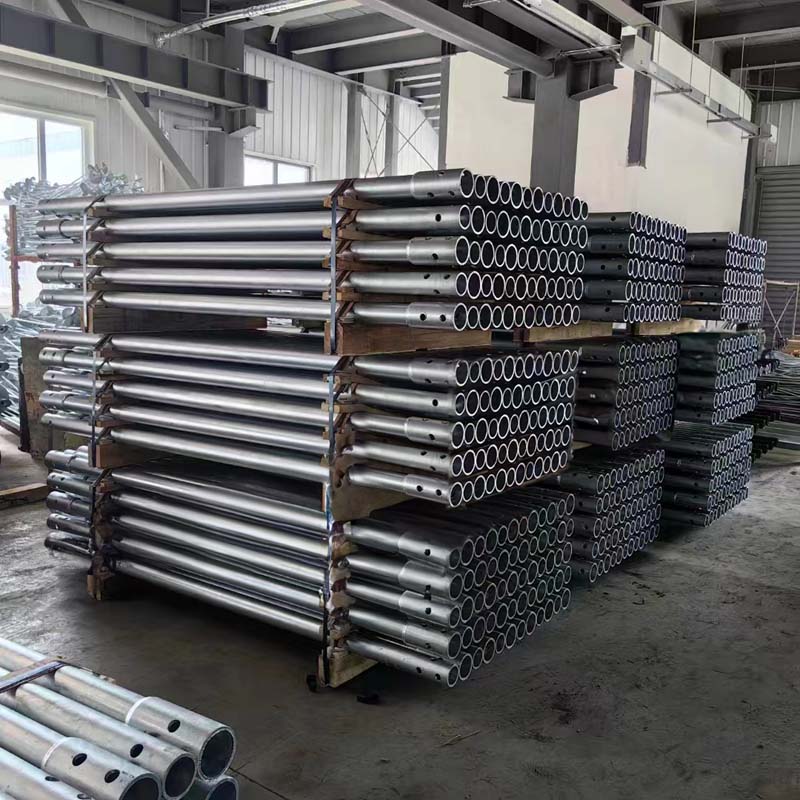
Based in China’s premier steel manufacturing hub, MODULAR CAMPS is a leading manufacturer and global supplier of high-performance helical piles and anchoring systems. We bridge the gap between advanced geotechnical engineering and cost-effective manufacturing.
Our helical piles are manufactured using premium-grade, hot-dip galvanized steel, ensuring a 50+ year service life in even the most corrosive soil conditions. From residential underpinning to utility-scale solar farms, we provide international contractors with the structural integrity they demand at a competitive factory-direct price point.
Stop digging and start screwing. Contact us today for a technical catalog and bulk pricing.
Contact Us
We’re always ready to listen to your needs and provide professional solutions for your business.
- MODULAR CAMPS CO.,LTD.
- 15 Changjiang Rd, Pingdu, Qingdao,China.
- +86-15963001578
- +86-15963001578
- info@modularcamps.com
- https://modularcamps.com