
Steel Airplane Hangars

WHAT IS A STEEL AIRCRAFT HANGAR?
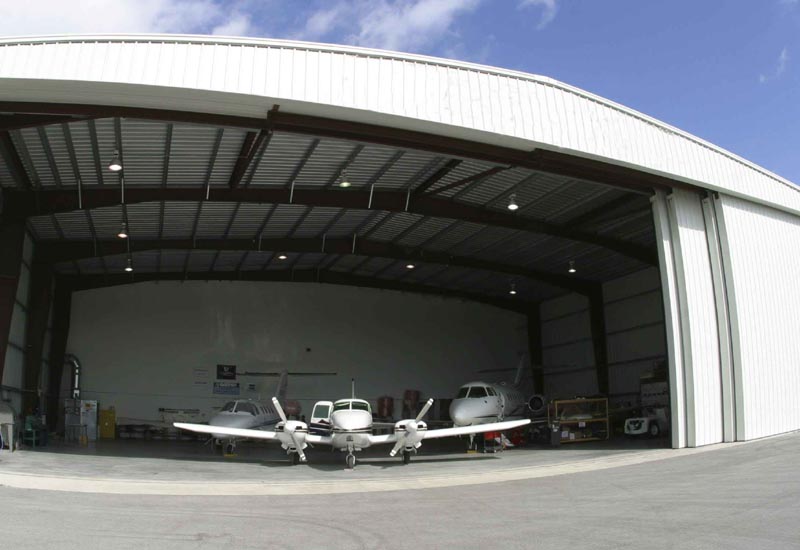
A steel aircraft hangar is a prefabricated steel structure specifically designed for the storage, maintenance, and protection of aircraft. Due to the wide wingspan of aircraft and the need for unobstructed movement space, steel structures, with their large spans, have become the preferred choice for airports and private pilots worldwide.
METAL HANGAR BUILDING CORE FEATURES
Metal shed storage buildings are versatile for multi-scene storage, suitable for both personal and commercial use:
No | Feature Category | Key Features & Details |
1 | Structural Strength & Safety (Core) | Pre-engineered steel frame; high load-bearing (for all aircraft types); 30m–100m+ clear-span (no interior columns); wind/snow/seismic resistant; anti-corrosion treatment; 50+ years service life |
2 | Large Space & Flexible Layout | Customizable span (30m–100m+), length (modular), eave height (8m–20m+); flexible internal division (parking, maintenance, office, storage); easy to expand/modify |
3 | Fast Construction & Cost-Efficiency | Factory prefabricated components, bolted assembly (30%–50% faster than concrete); lightweight structure reduces foundation cost; less waste/labor; low maintenance cost |
4 | Practical Design & Functionality | Specialized large doors (sliding/folding/rolling); optional insulated panels (thermal/soundproof); optimized ventilation/lighting; fire-resistant/anti-static; meets aviation safety standards |
5 | Versatility & Wide Applications | Suitable for civil/private airports, military bases, aviation training, maintenance companies; multi-purpose (storage, maintenance, exhibition); relocatable/reusable |
Clear-span design
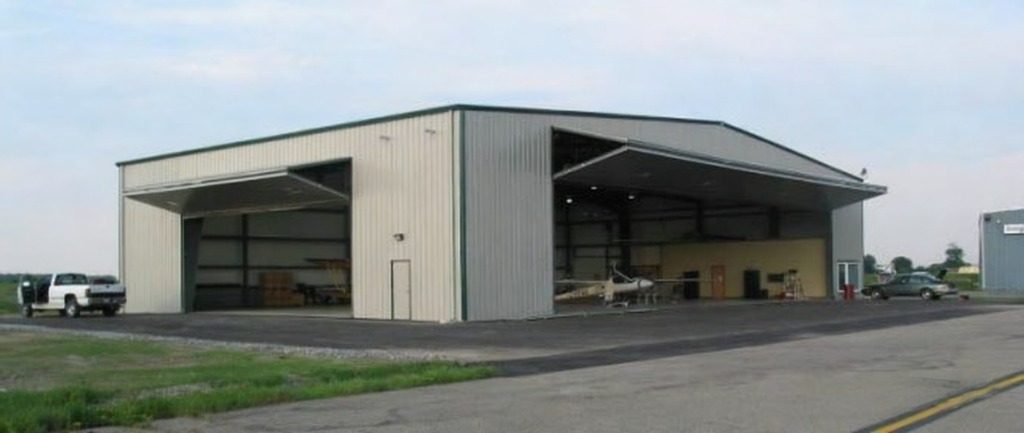
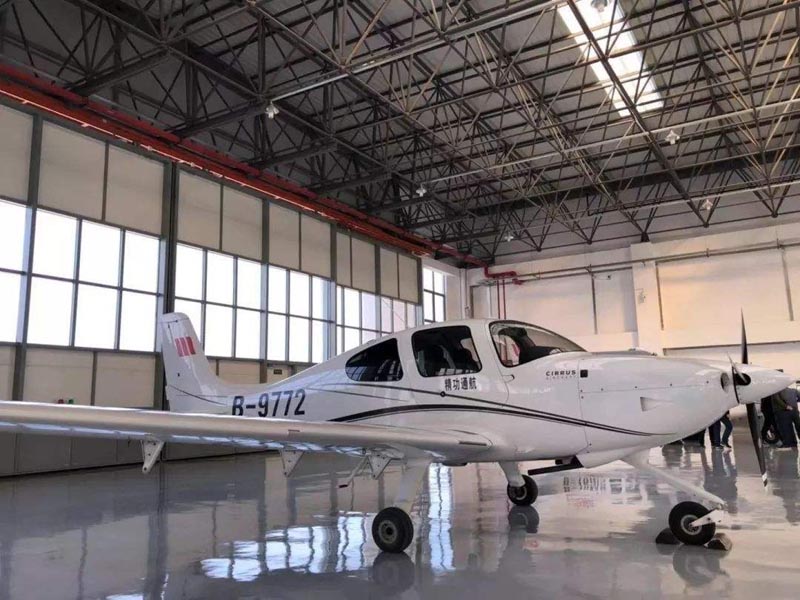
This is the biggest advantage of steel structures. It allows for a clear span of over 200 feet (approximately 60 meters) without any internal supporting columns. This ensures that aircraft wings will not collide with obstacles when moving inside.
Special door systems
Hangar doors are the most critical component. Common types include:
Bi-fold doors
Fold vertically upwards to save space.
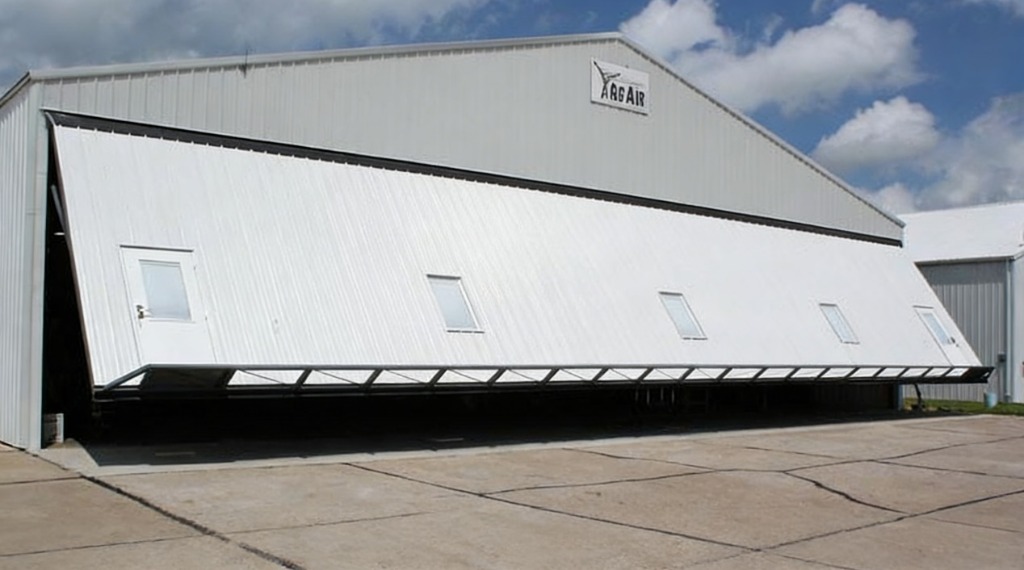
Hydraulic doors
Open single-panel upwards, resembling a large awning. Sliding/Stacking doors: Slide along tracks to the sides, suitable for large commercial passenger hangars.
DESIGN KEY POINTS OF METAL AIRCRAFT HANGAR BUILDINGS
1. Aircraft-Specific Size & Space:
Match span (30–100m+), length, eave height (8–20m+) to aircraft type; reserve 1.5–2x wingspan for maneuvering; avoid interior columns.
2. Structural Safety & Durability:
Use pre-engineered steel frame (wind/snow/seismic resistant); apply anti-corrosion treatment; reinforce for heavy loads (maintenance equipment); 50+ year service life.
3. Door System:
Choose sliding/folding/rolling doors (custom-sized); ensure good sealing, smooth operation, and safety devices (anti-collision, emergency stop).
4. Functional Layout:
Reasonably divide spaces (parking, maintenance, storage, office); equip with ventilation, lighting, and necessary pipelines (water, electricity, fuel).
5. Thermal Insulation & Adaptation:
Use insulated panels for stable internal temperature; add sound insulation and moisture-proof measures (for coastal/humid areas).
6. Safety & Compliance:
Follow aviation/fire safety standards; install fire-fighting equipment, anti-static floors, and good drainage.
7. Flexibility & Expandability:
Adopt modular design for future expansion; ensure relocatable structure if needed.
HOW TO POSITION AIRCRAFT INSIDE OF METAL HANGAR?
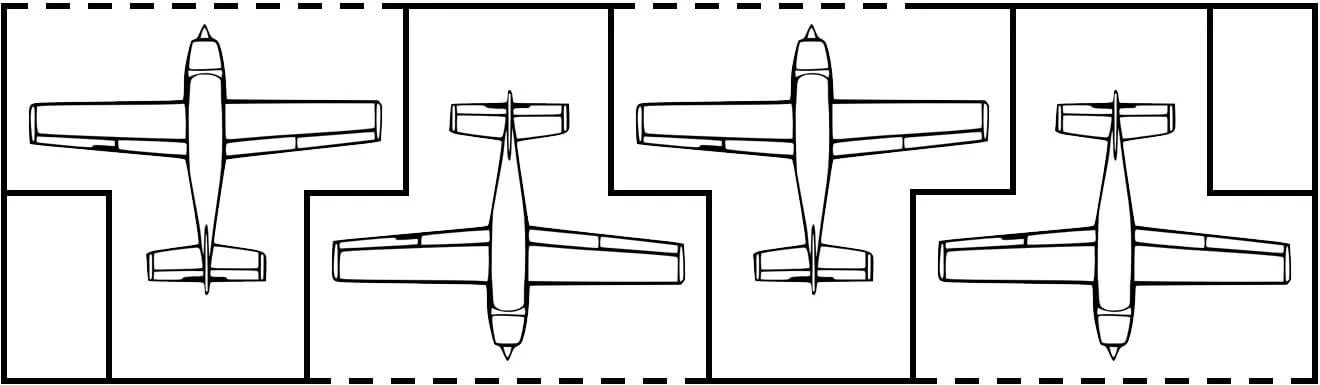
A T-shaped hangar is a layout where aircraft are parked in a roughly T-shaped space.
The wings are located in the wider T-shaped area, while the tail extends into the recessed area. This layout allows multiple T-shaped hangars to be built side-by-side, effectively utilizing space while ensuring each aircraft has its own independent parking space.
Whether to use an open, marked common area or divide the hangar into multiple T-shaped hangars depends on the number of aircraft you own, the frequency of aircraft movement, and the level of privacy or security required by each owner.
HOW TO SEPARATE INTERIOR SPACE OF METAL AIRPLANE HANGAR?
Within a metal aircraft hangar, defining clear functional zones is essential to ensure efficient operations, safety, and overall functionality. These key zones should be clearly delineated:
– Aircraft parking and maneuvering zone
– Maintenance workshop and dedicated maintenance zone
– Parts and tire storage zone
– Hangar offices and administrative zone
Separating the clean aircraft parking zone from the more debris-prone maintenance workshop is a critical step in dust control, helping to maintain a clean main floor and protect aircraft components from contamination.
Implementing simple yet effective measures can significantly enhance the convenience and comfort of daily hangar operations. For instance, positioning hangar offices to overlook the main floor allows for easy monitoring of aircraft and on-site activities, while placing parts storage areas in close proximity to the maintenance workshop streamlines the retrieval of tools and components, reducing operational downtime.
WHAT AFFECT AIRCRAFT HANGAR COST AND BUDGET
1. Size & Clear Span (Biggest Driver)
Total area & span width: Larger hangars need more steel, foundation, and cladding.
Small private: ~20–30m span
Commercial jet: ~40–60m span
Wide-body/MRO: >80m span
Height: Higher ceilings increase structural and door costs.
Cost impact: ~15–20% increase for every 10m wider span.
2. Structural & Material Choices Steel grade & frame type:
Heavy-duty frames for large spans cost more. Roof & wall panels: Insulated metal panels (IMP) cost more than basic siding but improve energy efficiency. Corrosion resistance: Coastal/industrial areas need galvanized or coated steel, adding ~15–20%.
3. Hangar Door System (Major Expense) Type:
Bi-folding, rolling, or hydraulic doors. Size & automation: Wider, motorized doors cost $10k–$50k+. Cost impact: Doors can be 15–30% of total building cost.
4. Site & Foundation Land cost/lease:
Urban/airport-adjacent land is far pricier. Soil conditions: Poor soil needs deeper foundations or piling. Slab thickness: 6–8” for storage; 8–10”+ for heavy aircraft/tugs. Site prep: Grading, drainage, apron paving add upfront cost.
5. Climate & Environmental Loads Wind/snow/earthquake:
Severe regions need reinforced frames, raising cost ~30%. Insulation & climate control: Full HVAC, dehumidification, or fire suppression adds 25–40%.
6. Interior Fit-Out & Systems Electrical, lighting, fire protection:
Basic vs. industrial-grade systems. Maintenance bays, offices, storage: Custom interiors increase cost. Crane systems: For MRO hangars, add significant cost.
7. Customization & Future Expansion Modular design:
Expandable endwalls cost slightly more upfront but save on future renovations. Aesthetics: Custom cladding, windows, or finishes add to the budget.
STEEL AIRCRAFT HANGAR FOR SALE
Our steel aircraft hangars are engineered to protect private planes, helicopters, and commercial aircraft with superior strength and reliable performance. Built with heavy-duty prefabricated steel frames, they feature a clear-span, column-free interior for smooth aircraft maneuvering, along with large custom hangar doors for easy access. Wind-resistant, snow-load approved, and low-maintenance, these hangars ensure long-term security and reduced operating costs.
We provide flexible sizing, optional insulation, lighting, and ventilation systems to match your exact aviation needs. Whether for personal, business, or airport use, Modular Camps delivers stable construction, fast installation, and consistent quality you can trust.
Contact Us
We’re always ready to listen to your needs and provide professional solutions for your business.
- MODULAR CAMPS CO.,LTD.
- 15 Changjiang Rd, Pingdu, Qingdao,China.
- +86-15963001578
- +86-15963001578
- info@modularcamps.com
- https://modularcamps.com